

Navigating Dietary Restrictions in Event Catering: How to Create Inclusive, Stress-Free Events

Navigating Dietary Restrictions in Event Catering

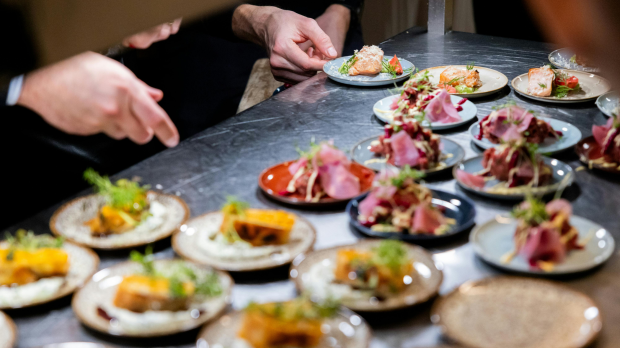
One of the most common concerns clients raise during the event planning process is catering, specifically how to accommodate dietary restrictions. Food is central to the guest experience, and when guests feel overlooked or unsafe, it can impact how they remember the event.

Today’s events often include guests with allergies, intolerances, medical needs, religious considerations, and personal preferences. Navigating dietary restrictions is no longer optional. It is a key part of professional event planning.

With the right approach, accommodating dietary needs does not have to be stressful. In fact, it can elevate the guest experience and show thoughtful attention to detail.

Why Dietary Restrictions Matter More Than Ever

Guest expectations have evolved.

More people are aware of food sensitivities, health concerns, and ethical food choices. When guests attend an event, they want to feel considered and cared for, not like an afterthought.

Ignoring dietary restrictions can lead to:

  • Uncomfortable or unsafe situations
  • Guests unable to eat
  • Negative impressions of the event

Thoughtful catering communicates respect and professionalism.

Continue reading
Utilizing Data Analytics for Event Success: How Smart Planning Leads to Better Events

Utilizing Data Analytics for Event Success

When people think about event planning, they often picture creativity, decor, and logistics. While those elements are essential, there is another powerful tool that plays a major role behind the scenes: data analytics.

Data analytics may sound technical, but at its core, it is simply the process of learning from information. For event planning, that information helps guide decisions, improve experiences, and ensure each event is better than the last.

Whether you are planning a wedding, corporate event, or private celebration, using data intentionally can take your event from good to exceptional.

What Data Analytics Means in Event Planning

In event planning, data analytics refers to collecting and reviewing information related to attendance, engagement, timing, feedback, and overall performance.

This data can come from many sources, including RSVPs, guest surveys, ticket sales, timelines, social media engagement, and post-event feedback.

Instead of relying on assumptions, data allows planners to see what truly worked, what needs improvement, and what guests responded to most.

Continue reading

Starting an Event Planning Business? Here Are the Top Things You Need to Know First

If You’re About to Start an Event Planning Business, Here’s What You Should Know

Starting an event planning business often begins with a passion for creativity, organization, and bringing people together. Many aspiring planners imagine beautiful designs, happy clients, and memorable celebrations. While all of that is absolutely possible, the reality of running an event planning business involves much more than just planning pretty events.

Knowing what to expect before you start can save you time, money, and unnecessary stress. Here are the top things you should know if you’re about to start an event planning business.

Event Planning Is a Business First

One of the biggest surprises for new planners is realizing how much of the job involves running a business.

You’ll spend time on:

  • Client communication
  • Contracts and invoices
  • Scheduling and timelines
  • Vendor coordination
  • Marketing and sales

Loving events is important, but understanding business fundamentals is essential for long-term success.

Continue reading

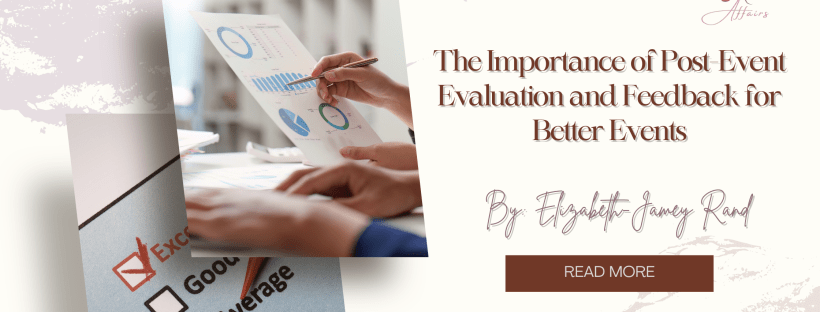
The Importance of Post-Event Evaluation and Feedback for Better Events

The Importance of Post-Event Evaluation and Feedback

When an event wraps up, most people feel a sense of relief. The guests had fun, the timeline flowed, and the celebration came together. It’s tempting to close the book and move on to the next thing.

But as an event planner, I’ve learned something important. The most successful events are not just well-executed. They are reviewed, evaluated, and improved upon.

Post-event evaluation and feedback are what turn a good event into a great one, and a great one into an unforgettable experience the next time around.

Why Post-Event Evaluation Matters

Every event tells a story. Not just during the celebration, but behind the scenes as well.

Post-event evaluation allows you to look at the event objectively. It helps answer important questions such as:

  • What worked exactly as planned?
  • What felt rushed or unclear?
  • Where did guests seem most engaged?
  • What could be improved next time?

Without reflection, these insights are easily lost. Evaluation gives structure to learning and growth.

Continue reading

The Importance of Timeline Management in Event Planning (and Why It Makes or Breaks Your Event)

The Importance of Timeline Management in Event Planning

If there’s one behind-the-scenes element that determines whether an event feels seamless or stressful, it’s timeline management.

Guests may never see the detailed schedules, run-of-show documents, or vendor timelines, but they feel the results. When everything flows effortlessly, it’s usually because someone took the time to manage the timeline carefully.

In event planning, time is not just a detail. It’s the backbone of the entire experience.

What Timeline Management Really Means

Timeline management is more than listing start and end times.

It involves:

  • Coordinating vendors and staff
  • Structuring setup and breakdown
  • Managing transitions between moments
  • Allowing buffer time for the unexpected

A strong timeline keeps everyone aligned and reduces last-minute chaos.

Continue reading

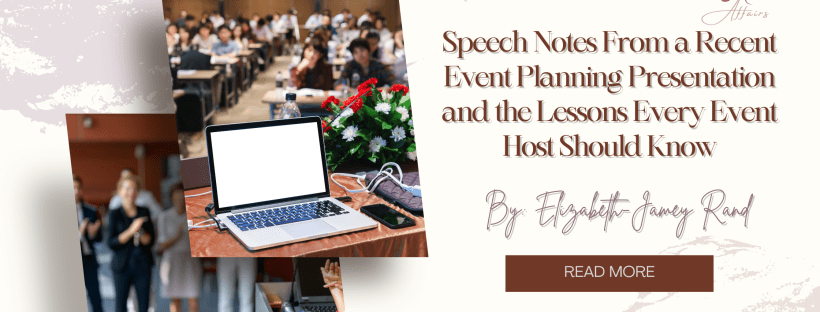
Speech Notes From a Recent Event Planning Presentation and the Lessons Every Event Host Should Know

Speech Notes From a Recent Event Planning Presentation

Recently, I had the opportunity to speak at an event about what truly goes into planning successful events. As I was preparing my notes, I realized how often people underestimate the amount of strategy, coordination, and intention required to pull off an event that feels effortless.

Today, I want to share those speech notes with you. Not as a formal transcript, but as a behind-the-scenes look at what professional event planning really involves and why having the right support makes all the difference.

Whether you are planning a wedding, corporate event, celebration, or private party, these insights apply across the board.

Opening Message: Events Are Experiences, Not Just Dates on a Calendar

One of the first points I shared was this. An event is not just something that happens on a specific day. It is an experience that begins the moment someone receives an invitation and continues long after the last guest leaves.

Every decision made during planning impacts how guests feel. From communication to flow to atmosphere, details matter because they shape memories.

Great events are not rushed together. They are intentionally designed.

Continue reading

How to Get a Job in the Event Planning Industry (Even With Little Experience)

How to Get a Job in the Event Planning Business Industry

Event planning is one of those careers that looks glamorous from the outside but requires a unique mix of organization, creativity, communication, and calm under pressure. If you’ve ever wondered how to get a job in the event planning industry, you’re not alone.

The good news is that event planning is a field where attitude, work ethic, and real-world skills often matter more than formal titles. Many successful planners started with little experience and learned by doing.

Here’s how to position yourself for success and break into the event planning business the right way.

Understand What Event Planning Really Involves

Before applying for jobs, it’s important to understand what event planning actually looks like day to day.

Event planning involves:

  • Managing timelines and logistics
  • Communicating with clients and vendors
  • Problem-solving under pressure
  • Coordinating multiple moving parts
  • Working long or irregular hours

If you enjoy staying organized, working with people, and handling challenges calmly, this industry may be a great fit.

Continue reading

A Guide to Planning Eco-Friendly Corporate Events Without Sacrificing Style or Impact

A Guide to Planning Eco-Friendly Corporate Events

Sustainability has become an important part of how companies operate, communicate, and connect with their audiences. That focus does not stop at products or services. It now extends to how businesses host meetings, conferences, and corporate events.

Planning an eco-friendly corporate event does not mean compromising on quality, creativity, or professionalism. In fact, when done thoughtfully, sustainable events often feel more intentional, more memorable, and more aligned with modern brand values.

Whether you are hosting a small team meeting or a large corporate gathering, this guide will help you understand how to plan eco-friendly corporate events that make a positive impact.

Why Eco-Friendly Corporate Events Matter

Corporate events reflect your company’s values. Clients, employees, and partners pay attention to how events are organized, from materials used to food served.

Eco-friendly events reduce environmental impact while also demonstrating responsibility and leadership. They show that your organization is forward-thinking and committed to making better choices.

Beyond reputation, sustainable planning can also reduce waste, streamline logistics, and often lower costs when done correctly.

Continue reading

How to Deal With Bad Days as an Event Planner (Without Losing Your Passion)

How to Deal With Bad Days

Let’s be honest. Event planning is not for the faint of heart. It’s creative, exciting, and incredibly rewarding, but it can also be stressful, unpredictable, and emotionally draining at times.

Bad days happen to everyone. Vendors cancel. Clients change their minds. Timelines shift. Weather doesn’t cooperate. And sometimes, despite doing everything right, things still go sideways.

The key isn’t avoiding bad days altogether. It’s learning how to deal with them in a way that protects your mindset, your business, and your well-being.

First, Give Yourself Permission to Have a Bad Day

One of the biggest mistakes professionals make is trying to push through bad days without acknowledging them.

You are allowed to feel frustrated, disappointed, or overwhelmed. Pretending everything is fine doesn’t make the stress go away. It just buries it.

Acknowledging a bad day doesn’t mean giving up. It means being human.

Continue reading

What to Expect From Your Wedding Planner and How They Make Your Big Day Stress-Free

What to Expect From Your Wedding Planner

Planning a wedding is exciting, emotional, and meaningful. It can also feel overwhelming very quickly. Between vendors, timelines, budgets, and expectations, many couples find themselves wondering if they are missing something or doing too much on their own.

That is where a wedding planner comes in.

Hiring a wedding planner is not about giving up control. It is about gaining clarity, support, and confidence so you can actually enjoy the experience leading up to your wedding day.

If you are considering working with a wedding planner, here is what you can realistically expect from the process.

Guidance From Day One

One of the first things a wedding planner provides is direction. Couples often come in with ideas, inspiration boards, or a general vision but are unsure how to bring everything together.

Your wedding planner helps turn ideas into a clear plan. This includes discussing your priorities, understanding your style, and identifying what matters most to you. From there, they help you make informed decisions instead of emotional or rushed ones.

This early guidance saves time, reduces stress, and prevents costly mistakes.

Continue reading