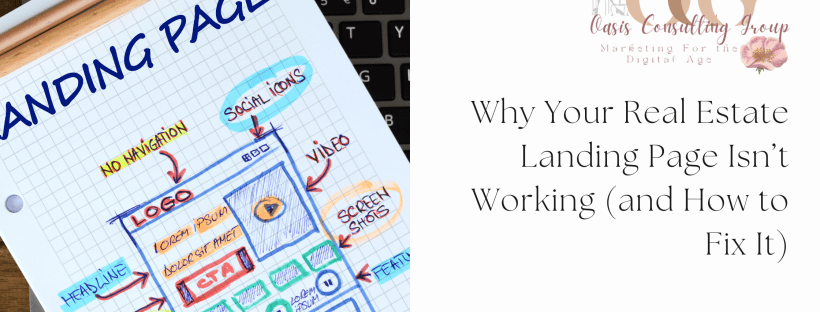
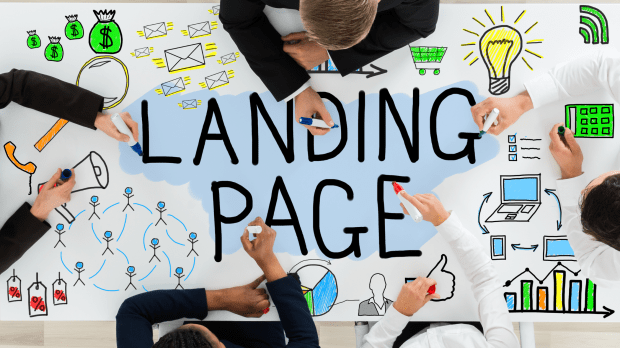
Why Your Real Estate Landing Page Isn’t Working (and How to Fix It)

Why Your Real Estate Landing Page Isn’t Working

If you’re running ads, posting on social media, or driving traffic to a landing page but not seeing leads come through, you’re not alone. This is one of the most common frustrations real estate professionals face.

A landing page is supposed to do one thing well: convert visitors into leads. When that doesn’t happen, it’s usually not because people aren’t interested in real estate. It’s because the page isn’t answering the right questions or guiding visitors clearly enough.

Let’s break down the most common reasons real estate landing pages fail and how to fix them without starting from scratch.

Your Message Isn’t Clear Enough

The first few seconds matter.

When someone lands on your page, they should instantly understand:

  • Who the page is for
  • What problem it solves
  • What they should do next

If your headline is vague or overly generic, visitors will leave. Phrases like “Your Trusted Real Estate Expert” don’t explain value. Instead, focus on outcomes such as helping buyers find homes or sellers maximize value.

Clarity always converts better than clever wording.

Continue reading

The Impact of Artificial Intelligence on Email Marketing for Small Businesses

The Impact of Artificial Intelligence on Email Marketing

Email marketing has always been one of the most powerful tools for small businesses. It is personal, cost effective, and one of the few marketing channels you truly own. But as customer expectations rise and inboxes become more crowded, sending the same message to everyone no longer works.

This is where artificial intelligence is changing the game.

AI is not replacing email marketing. It is enhancing it. When used correctly, AI helps small businesses send the right message to the right person at the right time, without adding more work to already busy schedules.

Let’s take a closer look at how AI is reshaping email marketing and what this means for small business owners.

What AI Really Means in Email Marketing

Artificial intelligence in email marketing refers to tools that analyze data, learn from behavior, and automate decisions that used to require manual effort. This includes understanding how subscribers interact with emails, what content they respond to, and when they are most likely to engage.

Instead of guessing what might work, AI uses patterns and data to guide smarter decisions. This allows small businesses to run more effective campaigns without needing a large marketing team.

AI does not remove the human element. It supports it by handling repetitive tasks and improving accuracy.

Continue reading

How to Write Project Case Studies That Win Clients and Build Trust

How to Write Project Case Studies That Win Clients

If you’ve ever wondered how to showcase your work without sounding salesy, project case studies are your answer. A well-written case study does more than show what you did. It shows how you think, how you solve problems, and what it’s like to work with you.

For small business owners, case studies are especially powerful because they build trust before the first conversation. When a potential client reads a relatable success story, they start imagining similar results for themselves.

Let’s walk through how to write project case studies that actually win clients, not just fill space on your website.

Why Case Studies Matter More Than Ever

In today’s market, people want proof.

They don’t just want to know what services you offer. They want to see real results, real challenges, and real outcomes. Case studies bridge that gap by showing your process in action.

A strong case study helps:

  • Build credibility
  • Shorten the sales cycle
  • Answer objections before they’re asked
  • Attract better-fit clients

Think of case studies as quiet salespeople working for you around the clock.

Continue reading

How to Pre-Qualify Your Leads Without Wasting Time or Missing Opportunities

How to Pre-Qualify Your Leads Without Wasting Time

If you’ve ever spent time chasing a lead that went nowhere, you’re not alone. One of the most common frustrations for small business owners is spending too much time on people who were never a good fit in the first place.

Pre-qualifying your leads does not mean being dismissive or overly sales-focused. It means creating a process that helps you identify who is ready, who needs nurturing, and who may not be aligned at all. When done correctly, pre-qualification saves time, reduces burnout, and improves conversions.

Let’s walk through how to pre-qualify your leads without missing real opportunities or coming across as pushy.

Understand That Not Every Lead Is a Client

The first mindset shift is accepting that every lead does not need immediate attention.

Some leads are curious. Some are researching. Some are just browsing. And some are genuinely ready to move forward. Your goal is not to force everyone into the same path, but to guide each lead appropriately.

Pre-qualification helps you prioritize energy instead of spreading yourself thin.

Continue reading

Why Local SEO Matters for Construction Companies (and How It Drives Real Leads)

Why Local SEO Matters for Construction Companies

If you run a construction company, most of your business comes from people nearby. Homeowners are not searching for contractors across the country. They are searching for someone local, reliable, and available.

That’s where local SEO comes in.

Local SEO helps your construction company show up when people in your service area search for services like “contractor near me,” “home remodeling company,” or “commercial construction services.” Without it, you are invisible to people actively looking for exactly what you offer.

Let’s break down why local SEO matters so much for construction companies and how it supports long-term growth.

Continue reading

How to Get More Referrals in the Construction Industry Without Chasing Leads

How to Get More Referrals in the Construction Industry

In the construction industry, trust is everything. Homeowners and business owners are not just hiring a contractor. They are trusting someone with their property, budget, and timeline. That’s why referrals remain one of the most powerful and reliable ways to grow a construction business.

Yet many construction companies rely on referrals passively, hoping happy clients will talk about them. The most successful contractors take a proactive approach, building systems that encourage referrals naturally and consistently.

Let’s break down how to generate more referrals in the construction industry without feeling awkward or salesy.

Deliver an Experience Worth Talking About

Referrals start with experience.

Quality workmanship is expected. What sets companies apart is how clients feel throughout the project. Clear communication, reliability, cleanliness, and professionalism all contribute to an experience clients want to share.

Small details matter. Showing up on time, explaining next steps, and following through consistently builds trust and leaves a lasting impression.

Continue reading

How to Automate Lead Follow-Up Without Losing the Human Touch

How to Automate Lead Follow-Up Without Losing the Human Touch

For many small business owners, lead follow-up is one of the biggest challenges. You work hard to generate leads, but keeping up with responses, check-ins, and nurturing conversations can quickly become overwhelming.

That’s where automation comes in. Unfortunately, automation has a bad reputation. Many people associate it with generic messages, robotic responses, and impersonal communication that turns potential clients away.

The truth is, automation itself is not the problem. Poor strategy is.

When done intentionally, automated lead follow-up can actually enhance the human connection rather than replace it. It allows you to show up consistently, respond quickly, and build trust without burning out.

Why Follow-Up Matters More Than Speed Alone

Most leads do not convert on the first interaction.

People need time, information, and reassurance before making a decision. Consistent follow-up builds familiarity, and familiarity builds trust. Automation ensures that no lead falls through the cracks while still leaving room for real conversation.

The goal is not to close someone instantly. The goal is to guide them thoughtfully through the decision-making process.

Continue reading

Facebook Ads for Construction Companies: What Actually Works in 2026

Facebook Ads for Construction Companies: What Works?

Many construction company owners try Facebook Ads once, feel disappointed, and never touch them again. Often, the issue is not the platform. It’s the strategy behind the ads.

Facebook Ads can work extremely well for construction companies, but only when they are built around trust, clarity, and local relevance. Homeowners and business owners don’t hire contractors impulsively. They research, compare, and look for reassurance before reaching out.

Let’s break down what actually works when running Facebook Ads for construction companies.

Why Facebook Ads Are Effective for Construction Businesses

Facebook allows you to reach people before they actively search for a contractor.

This matters because many homeowners are in the “thinking about it” phase long before they ever type anything into Google. Facebook Ads help you stay visible during that consideration stage.

For construction companies, Facebook Ads are especially effective for:

  • Remodeling and renovations
  • Home improvement projects
  • Local services
  • Long decision-cycle projects

When used correctly, Facebook Ads warm up prospects before they ever make contact.

Continue reading

Google Ads vs. Facebook Ads: Which Is Better for Realtors Looking to Generate Leads?

Google Ads vs. Facebook Ads: Which Is Better for Realtors?

If you’re a realtor investing in digital marketing, you’ve likely asked this question more than once. Should you be using Google Ads or Facebook Ads to generate leads?

The answer is not as simple as choosing one over the other. Both platforms are powerful, but they work in very different ways. Understanding how each platform attracts prospects and supports your sales process helps you choose the right strategy for your business goals.

Let’s break down the strengths, limitations, and ideal use cases for both Google Ads and Facebook Ads so you can make an informed decision.

Understanding Buyer Intent

The biggest difference between Google Ads and Facebook Ads comes down to intent.

Google Ads capture people who are actively searching. When someone types “homes for sale near me” or “sell my house fast,” they are signaling immediate intent. These users are often closer to making a decision.

Facebook Ads, on the other hand, focus on discovery. Users are not searching for real estate services. They are scrolling. This means Facebook Ads work best for nurturing interest, building awareness, and staying top of mind.

Both types of intent matter in real estate.

Continue reading

The Rise of Micro-Influencers in Marketing and Why Small Businesses Should Care

The Rise of Micro-Influencers in Marketing

Not too long ago, influencer marketing felt out of reach for most small businesses. Big-name influencers with massive followings came with big price tags, complex contracts, and no guarantee of real results. For many business owners, it felt like a gamble rather than a strategy.

That’s where micro-influencers come in.

Micro-influencers are quickly becoming one of the most effective and affordable marketing tools for small businesses. They may not have millions of followers, but what they do have is trust, authenticity, and highly engaged audiences. And in today’s marketing landscape, those things matter more than ever.

If you are looking for smarter ways to grow your brand without stretching your budget, understanding the rise of micro-influencers is essential.

What Is a Micro-Influencer

A micro-influencer is typically someone with a smaller but highly engaged social media following, often ranging from 1,000 to 100,000 followers. These creators usually focus on a specific niche, such as local businesses, lifestyle, fitness, beauty, real estate, food, or entrepreneurship.

What makes micro-influencers so powerful is their relationship with their audience. Their followers see them as relatable, approachable, and trustworthy. That trust often translates into higher engagement rates and stronger purchasing influence compared to larger influencers.

For small businesses, this means your message feels like a recommendation from a friend rather than an advertisement.

Continue reading