

Is Your Business Haunted by Missed Opportunities?

The Scary Stats Every Small Business Owner Should Know About DIY Marketing

We’ve all heard the phrase, “If you want something done right, do it yourself.”

But when it comes to marketing your small business, that mindset can be more harmful than helpful.

The truth is, DIY marketing might be holding your business back in ways you don’t even realize. From inconsistent branding and half-finished email campaigns to neglected social media and forgotten leads, trying to do everything on your own isn’t just overwhelming—it’s costly.

If your business isn’t growing the way it should, it may not be because of what you’re doing wrong. It might be what you’re not doing at all.

Continue reading

Fortifying Your Construction Business: A Halloween Guide to Resilience and Growth

Halloween is the perfect season for scary stories—but for many construction business owners, the most terrifying tales aren’t about haunted houses or creepy creatures. They’re about sudden market crashes, supply chain disruptions, and projects that vanish overnight. These business nightmares can be more chilling than any ghostly encounter.

Just like a sturdy house needs a solid foundation, your construction business must be built on a framework of resilience. The ability to adapt, pivot, and bounce back from setbacks is the difference between companies that weather storms and those that end up buried in the business graveyard.

Let’s explore how you can transform your company into a fortress that no business “monster” can knock down.

1. Exorcise Inefficiencies From Your Operations

Every construction project relies on precise planning, scheduling, and execution. Yet many companies fall victim to inefficiencies—wasted materials, unclear communication, and poor time management. These inefficiencies are like pesky poltergeists, quietly draining your resources.

The Fix:

  • Implement project management tools like Trello, Asana, or Buildertrend to keep everyone aligned.
  • Standardize workflows to eliminate confusion.
  • Regularly audit your processes to spot time and money leaks.
Continue reading

Frightening Obstacles: What’s Haunting Your Construction Company’s Growth This Halloween?

For many construction business owners, growth feels like chasing a ghost—it’s there one moment and gone the next. You’re taking on projects, working long hours, and yet, the business isn’t scaling the way you expected. With Halloween here, it’s the perfect time to face the monsters that might be haunting your construction company’s success.

Just like an old haunted house hides cobwebs in every corner, your business might be hiding growth blockers you haven’t noticed. Let’s shine a flashlight on these chilling culprits—and talk about how to slay them.

1. The Invisible Marketing Plan

You may be the best builder in town, but if no one knows your name, your pipeline will run dry. Many construction companies rely solely on word-of-mouth or outdated advertising. Without a strong digital presence—especially on Google, social media, and local directories—you’re essentially a ghost in the marketplace.

Fix the fright:

Invest in digital marketing that includes social media management, lead generation campaigns, and a strong website with SEO. Visibility is the key to bringing in more leads.

Continue reading

How to Make Real Estate Listings Stand Out Online and Get Noticed

With thousands of homes hitting the market daily, your real estate listings can easily get lost in the digital noise. In the online world, first impressions matter—buyers are scrolling fast, and if your listing doesn’t grab their attention within seconds, they’ll move on.

The good news? There are simple yet effective ways to make your listings stand out, drive engagement, and generate more inquiries. Whether you’re a new agent or a seasoned pro, these tips will help your listings shine online.

Tip #1. Use High-Quality, Professional Photos

Photos are the first thing potential buyers notice. Blurry, dark, or poorly composed images will instantly turn them off. Invest in professional photography—or learn the basics of real estate photo composition and lighting if you’re DIY-ing it.

Pro Tip: Highlight the best angles, use natural light, and shoot both wide shots and close-ups. Don’t forget exterior shots, backyard views, and community features!

Continue reading

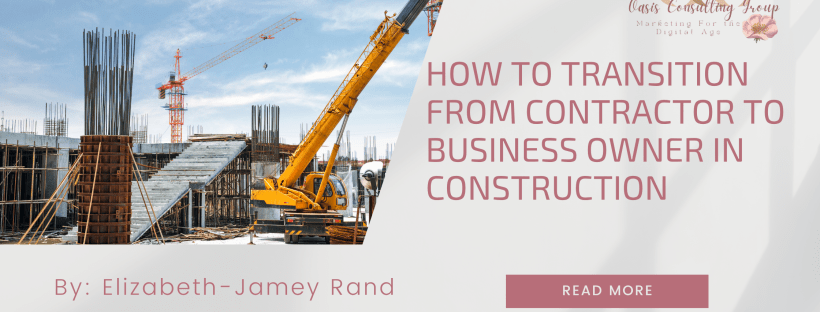
How to Transition from Contractor to Business Owner in Construction

Many skilled contractors start out working independently, relying on their tools, talent, and hard work to get the job done. But as demand grows, so does the opportunity—and the need—to shift from being “on the tools” to running a full-fledged construction business.

This transition is one of the most important and challenging phases in a contractor’s career. It requires a shift from doing the work to leading a team, managing finances, building systems, and growing a brand. Here’s how to successfully make the leap from contractor to business owner.

1. Change Your Mindset

The first step in the transition is understanding that you’re no longer just a contractor—you’re now the CEO. That means you need to think long-term, delegate, and make decisions based on what’s best for the business, not just the job.

Ask yourself:

  • Are you working in the business or on the business?
  • Can your company run without you swinging the hammer?

The sooner you adopt a leadership mindset, the sooner your business can scale.

Continue reading

Strategic Planning for Construction Companies: A Proven 5-Step Guide to Sustainable Growth

In the fast-paced, margin-sensitive world of construction, it’s easy to fall into the trap of reactive decision-making. Job deadlines, labor shortages, and budget constraints often pull your focus to immediate issues—leaving little time for big-picture thinking. But here’s the truth: construction companies that implement strategic planning consistently outperform those that don’t.

Whether you’re a GC, specialty contractor, or construction management firm, you need a strategy to grow intentionally and sustainably. Here’s how to do it in five actionable steps.

Step 1: Define Your Vision and Mission

Start by answering these two questions:

  • Where do you want your company to be in 3–5 years?
  • What values drive your business?

Your vision provides direction, while your mission anchors your purpose. Together, they guide every decision—from hiring and partnerships to client acquisition.

Pro Tip: Make these statements clear and inspiring enough that your team can rally around them.

Continue reading

Top Social Media Platforms Every Realtor Should Use—and How to Maximize Each One

Real estate is a relationship-driven business—and in 2025, those relationships are often sparked and nurtured through social media. But not all platforms are created equal, especially for realtors who want to stand out and convert engagement into sales.

Here’s a breakdown of the top social platforms for real estate professionals, plus strategic tips on how to use each one:

Platform #1. Instagram: Visual Storytelling at Its Best

Instagram is a must for realtors. With its visual-first layout, it’s the perfect platform to showcase listings, offer behind-the-scenes looks, and build a lifestyle brand.

How to Use It:

  • Use Reels for quick home tours or market tips.
  • Post carousel photos of your listings.
  • Share testimonials in Stories with “Client Spotlight” highlights.
  • Use local hashtags like #AtlantaRealtor or #HoustonHomes.
Continue reading

Are You Running Your Construction Business Like a CEO—or Just a Contractor?

In the construction world, many business owners start out as skilled tradespeople who eventually “grow into” the role of business owner. But here’s the truth: there’s a massive difference between running jobs and running a company.

If you’re still wearing your toolbelt more often than reviewing budgets or developing strategies, you might be operating more like a technician than a CEO. And that’s holding your construction business back.

Let’s explore what it means to truly run your company like a CEO—and how to make the mindset shift.

CEO vs. Contractor Mindset

A contractor thinks short-term: finish this job, meet payroll this week, fix today’s fire.

A CEO thinks long-term: What’s our profit margin trend? What systems are breaking? What can we automate? Who do we need to hire to grow?

Start thinking like the leader of a scalable business—not just a doer.

Get Out of the Weeds

CEOs don’t need to be on-site every day. Instead, they delegate, build teams, and oversee operations from a strategic perspective. This doesn’t mean you don’t care—it means you care about everything, not just the job site.

  • Your time should be spent on:
  • Reviewing KPIs and job costing
  • Planning next quarter’s pipeline
  • Building vendor and client relationships
  • Hiring, training, and developing leaders
Continue reading

Why Realtors Need a Strong Online Presence in 2025: Staying Visible, Relevant, and Ready to Win

The real estate industry is evolving fast, and 2025 is proving to be the most digitally driven year yet. If you’re a realtor who still relies mostly on referrals and yard signs, you’re leaving a massive amount of opportunity on the table. Today’s buyers and sellers live online—and that’s exactly where you need to meet them.

Reason #1. Buyers Start Online—Before They Ever Call an Agent

According to recent studies, over 90% of homebuyers begin their journey online. Whether they’re browsing listings, reading reviews, or following local agents on Instagram, they’re making impressions and decisions long before they pick up the phone. If your digital presence is outdated, inconsistent, or nonexistent, they’ll move on—fast.

Reason #2. Your Website Is Your Digital Business Card

A well-designed, mobile-friendly website builds instant credibility. It’s the place to showcase your listings, introduce yourself with a professional bio and headshot, share testimonials, and offer valuable resources. In 2025, a personal real estate website isn’t a luxury—it’s a necessity.

Continue reading

How to Set and Track KPIs for Sustainable Growth in Your Construction Business

Running a construction business without KPIs is like building a house without a blueprint—risky, expensive, and inefficient. Key Performance Indicators (KPIs) provide measurable insights into how your company is performing across operations, finance, and project execution. When set and tracked properly, KPIs become one of the most powerful tools for growth, accountability, and forecasting.

Here’s how to effectively set and track KPIs in your construction business:

Step 1: Identify Your Business Goals

Before you can define useful KPIs, you need to clarify your goals. Are you aiming for higher profit margins, more efficient job sites, or improved client satisfaction? Align your KPIs with your strategic priorities. Examples include:

  • Increasing project completion rate on time and on budget
  • Reducing rework and safety incidents
  • Improving cash flow and net profit
Continue reading