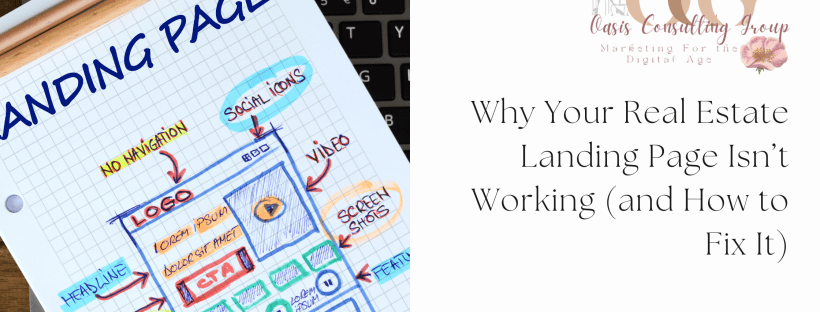

Why Your Real Estate Landing Page Isn’t Working (and How to Fix It)

Why Your Real Estate Landing Page Isn’t Working

If you’re running ads, posting on social media, or driving traffic to a landing page but not seeing leads come through, you’re not alone. This is one of the most common frustrations real estate professionals face.

A landing page is supposed to do one thing well: convert visitors into leads. When that doesn’t happen, it’s usually not because people aren’t interested in real estate. It’s because the page isn’t answering the right questions or guiding visitors clearly enough.

Let’s break down the most common reasons real estate landing pages fail and how to fix them without starting from scratch.

Your Message Isn’t Clear Enough

The first few seconds matter.

When someone lands on your page, they should instantly understand:

  • Who the page is for
  • What problem it solves
  • What they should do next

If your headline is vague or overly generic, visitors will leave. Phrases like “Your Trusted Real Estate Expert” don’t explain value. Instead, focus on outcomes such as helping buyers find homes or sellers maximize value.

Clarity always converts better than clever wording.

Continue reading

Why Local SEO Matters for Construction Companies (and How It Drives Real Leads)

Why Local SEO Matters for Construction Companies

If you run a construction company, most of your business comes from people nearby. Homeowners are not searching for contractors across the country. They are searching for someone local, reliable, and available.

That’s where local SEO comes in.

Local SEO helps your construction company show up when people in your service area search for services like “contractor near me,” “home remodeling company,” or “commercial construction services.” Without it, you are invisible to people actively looking for exactly what you offer.

Let’s break down why local SEO matters so much for construction companies and how it supports long-term growth.

Continue reading

What to Include in Your Real Estate CRM for Better Conversions and Stronger Client Relationships

What to Include in Your Real Estate CRM for Better Conversions

Many real estate agents invest in a CRM but never fully use it to its potential. Instead of becoming a conversion engine, it turns into a digital address book filled with unorganized contacts and missed opportunities.

A properly built real estate CRM should support your entire client journey, from first interaction to closing and beyond. When structured strategically, it helps you follow up consistently, personalize communication, and convert more leads without adding more work to your day.

Let’s break down what your real estate CRM should include to improve conversions and build stronger client relationships.

Clear Lead Source Tracking

One of the most important CRM features is lead source tracking.

You need to know where each lead comes from, whether it’s social media, Google Ads, referrals, open houses, or email campaigns. This information allows you to understand which marketing efforts are working and where to invest your time and budget.

When you track lead sources properly, you can also tailor follow-up messaging based on how the lead first engaged with you.

Continue reading

Integrating Social Responsibility into Your Brand Without Losing Focus on Growth

Integrating Social Responsibility into Your Brand

For many small business owners, the idea of social responsibility can feel overwhelming. You are already juggling operations, clients, marketing, and finances. Adding “doing good” to the list can feel like one more thing competing for your attention.

The truth is, social responsibility does not have to be complicated or expensive. When done thoughtfully, it becomes a natural extension of your brand and a powerful way to build trust with the people you serve.

Today’s customers want more than just products and services. They want to support businesses that align with their values. For small businesses, this creates an opportunity to stand out in a meaningful way.

What Social Responsibility Really Means for Small Businesses

Social responsibility does not mean you need a massive charity budget or a global initiative. At its core, it means being intentional about how your business impacts people, your community, and the world around you.

This can show up in simple but powerful ways, such as supporting local causes, treating employees and contractors ethically, being transparent in your practices, or educating your audience on issues that matter.

The key is authenticity. Customers can sense when social responsibility is genuine versus when it feels like a marketing tactic.

Continue reading

How to Get More Referrals in the Construction Industry Without Chasing Leads

How to Get More Referrals in the Construction Industry

In the construction industry, trust is everything. Homeowners and business owners are not just hiring a contractor. They are trusting someone with their property, budget, and timeline. That’s why referrals remain one of the most powerful and reliable ways to grow a construction business.

Yet many construction companies rely on referrals passively, hoping happy clients will talk about them. The most successful contractors take a proactive approach, building systems that encourage referrals naturally and consistently.

Let’s break down how to generate more referrals in the construction industry without feeling awkward or salesy.

Deliver an Experience Worth Talking About

Referrals start with experience.

Quality workmanship is expected. What sets companies apart is how clients feel throughout the project. Clear communication, reliability, cleanliness, and professionalism all contribute to an experience clients want to share.

Small details matter. Showing up on time, explaining next steps, and following through consistently builds trust and leaves a lasting impression.

Continue reading

Facebook Ads for Construction Companies: What Actually Works in 2026

Facebook Ads for Construction Companies: What Works?

Many construction company owners try Facebook Ads once, feel disappointed, and never touch them again. Often, the issue is not the platform. It’s the strategy behind the ads.

Facebook Ads can work extremely well for construction companies, but only when they are built around trust, clarity, and local relevance. Homeowners and business owners don’t hire contractors impulsively. They research, compare, and look for reassurance before reaching out.

Let’s break down what actually works when running Facebook Ads for construction companies.

Why Facebook Ads Are Effective for Construction Businesses

Facebook allows you to reach people before they actively search for a contractor.

This matters because many homeowners are in the “thinking about it” phase long before they ever type anything into Google. Facebook Ads help you stay visible during that consideration stage.

For construction companies, Facebook Ads are especially effective for:

  • Remodeling and renovations
  • Home improvement projects
  • Local services
  • Long decision-cycle projects

When used correctly, Facebook Ads warm up prospects before they ever make contact.

Continue reading

Google Ads vs. Facebook Ads: Which Is Better for Realtors Looking to Generate Leads?

Google Ads vs. Facebook Ads: Which Is Better for Realtors?

If you’re a realtor investing in digital marketing, you’ve likely asked this question more than once. Should you be using Google Ads or Facebook Ads to generate leads?

The answer is not as simple as choosing one over the other. Both platforms are powerful, but they work in very different ways. Understanding how each platform attracts prospects and supports your sales process helps you choose the right strategy for your business goals.

Let’s break down the strengths, limitations, and ideal use cases for both Google Ads and Facebook Ads so you can make an informed decision.

Understanding Buyer Intent

The biggest difference between Google Ads and Facebook Ads comes down to intent.

Google Ads capture people who are actively searching. When someone types “homes for sale near me” or “sell my house fast,” they are signaling immediate intent. These users are often closer to making a decision.

Facebook Ads, on the other hand, focus on discovery. Users are not searching for real estate services. They are scrolling. This means Facebook Ads work best for nurturing interest, building awareness, and staying top of mind.

Both types of intent matter in real estate.

Continue reading

The Rise of Micro-Influencers in Marketing and Why Small Businesses Should Care

The Rise of Micro-Influencers in Marketing

Not too long ago, influencer marketing felt out of reach for most small businesses. Big-name influencers with massive followings came with big price tags, complex contracts, and no guarantee of real results. For many business owners, it felt like a gamble rather than a strategy.

That’s where micro-influencers come in.

Micro-influencers are quickly becoming one of the most effective and affordable marketing tools for small businesses. They may not have millions of followers, but what they do have is trust, authenticity, and highly engaged audiences. And in today’s marketing landscape, those things matter more than ever.

If you are looking for smarter ways to grow your brand without stretching your budget, understanding the rise of micro-influencers is essential.

What Is a Micro-Influencer

A micro-influencer is typically someone with a smaller but highly engaged social media following, often ranging from 1,000 to 100,000 followers. These creators usually focus on a specific niche, such as local businesses, lifestyle, fitness, beauty, real estate, food, or entrepreneurship.

What makes micro-influencers so powerful is their relationship with their audience. Their followers see them as relatable, approachable, and trustworthy. That trust often translates into higher engagement rates and stronger purchasing influence compared to larger influencers.

For small businesses, this means your message feels like a recommendation from a friend rather than an advertisement.

Continue reading

The Ultimate Social Media Strategy for Contractors Who Want More Leads, Not Just Likes

The Ultimate Social Media Strategy for Contractors

Many contractors believe social media is only for influencers, trendy brands, or businesses with a lot of free time. The truth is, social media is one of the most effective ways for contractors to build trust, showcase their work, and attract consistent leads without relying solely on referrals.

The key is having a strategy. Random posting, inconsistent updates, or only sharing promotions rarely produces results. A smart social media strategy turns your platforms into a steady source of visibility and inquiries.

Let’s break down what the ultimate social media strategy for contractors looks like and how to make it work without overwhelming your schedule.

Why Social Media Matters for Contractors

Before a homeowner or business owner hires a contractor, they want reassurance. They want to see your work, understand your expertise, and feel confident that you are reliable.

Social media allows you to:

  • Show proof of your work
  • Build credibility and trust
  • Stay top of mind
  • Educate potential clients
  • Generate inbound leads

In 2026, people often check social media before making a call. Your presence matters.

Continue reading

What Should Be on Your Construction Company Website in 2026 to Win More Projects

What Should Be on Your Construction Company Website in 2026

Your website is often the first impression potential clients have of your construction business. In 2026, that first impression matters more than ever. Property owners, developers, and homeowners are researching online before they ever make a call, and if your website doesn’t answer their questions or inspire confidence, they move on to the next contractor.

A modern construction company website should function as a sales tool, credibility builder, and lead generator all in one. Let’s walk through what your construction website should include in 2026 to attract better projects and more serious clients.

A Clear Value Proposition Front and Center

When someone lands on your site, they should immediately know:

  • What type of construction you specialize in
  • Who you serve
  • What makes you different

Avoid generic statements like “Quality Construction Services.” Instead, be specific. Whether you focus on residential remodeling, commercial build-outs, or specialty construction, clarity builds trust and keeps visitors engaged.

Continue reading