
The Impact of Customer Reviews on Your Business: Why They Matter More Than Ever

Customer reviews have become one of the most influential factors in consumer decision-making. Whether you run a local service-based business or an e-commerce brand, online reviews can either boost your credibility or drive potential customers away.

People trust people. That’s why 93% of consumers say online reviews influence their purchasing decisions. Even a handful of positive reviews can make a huge difference in establishing trust, increasing visibility, and driving revenue.

Let’s break down why customer reviews matter—and how they directly impact your business.

Reason #1. Reviews Build Trust and Credibility

Before buying a product or booking a service, customers want to know what others experienced. Reviews act as social proof, reassuring potential buyers that your business is trustworthy, professional, and delivers on its promises.

A business with dozens of glowing reviews immediately seems more reliable than one with no reviews at all. Even negative reviews, when handled properly, show that you care and are committed to improvement.

Continue reading


How to Diversify Your Construction Services and Win Bigger Bids

In the ever-changing world of construction, flexibility and innovation are key to staying competitive. If you’re only offering a narrow set of services, your business might be missing out on lucrative opportunities. Diversifying your construction services not only opens doors to bigger bids but also creates multiple revenue streams, helping your company stay resilient during slow seasons or economic downturns.

Here’s how to strategically diversify your services and boost your chances of landing larger, more profitable projects.

Tip #1. Start by Identifying Market Gaps

The first step in diversifying is to analyze your current market. What services are in high demand that you’re not currently offering? For example, are there growing trends in green building, smart home installations, or commercial renovations in your area?

Talk to existing clients, watch local bidding boards, and research construction trends. Identifying where your expertise overlaps with market demand will help you decide which services to add first.

Continue reading

The Art of Crafting Compelling Headlines That Drive Clicks and Engagement

In the fast-paced digital world, where attention spans are short and competition is fierce, your headline is often your only chance to capture interest. Whether it’s a blog post, YouTube video, Instagram reel, or newsletter subject line, your headline is the gateway to your content.

And here’s the truth: Even the best content can fall flat if the headline doesn’t spark curiosity, trigger emotion, or promise value. That’s why mastering the art of crafting compelling headlines is a must-have skill for marketers, entrepreneurs, bloggers, and anyone creating content online.

Let’s break down the core elements of a high-converting headline and how you can start writing ones that demand attention.

Element #1. Know Your Audience

Before you can craft an irresistible headline, you need to know who you’re talking to. What are their desires, fears, problems, or goals? The more specific your headline is to their interests, the more likely they are to click.

Examples:

  • “Top 10 Time-Saving Tools for Busy Real Estate Agents”
  • “What Every Small Business Owner Should Know About SEO in 2025”
Continue reading

How to Create a Real Estate Content Calendar That Actually Works

In the competitive world of real estate, staying top-of-mind with potential buyers and sellers requires more than just a “for sale” post here and there. It takes strategy, consistency, and creativity—three things that a strong content calendar can deliver.

A content calendar not only helps you stay organized, it also ensures that your content speaks to your audience’s needs at every stage of the buying or selling journey. Whether you’re promoting open houses, sharing market insights, or highlighting success stories, a thoughtful content calendar can be the secret weapon that separates you from the crowd.

Here’s how to build one that works.

Tip #1. Define Your Goals

Before you plan your content, know what you want to achieve. Is your goal to generate leads? Build brand awareness? Educate first-time buyers? Your goals will guide what type of content to create and when to post it.

Tip #2. Identify Your Target Audience

Understanding your ideal client—whether it’s first-time homebuyers, luxury property investors, or commercial clients—will help tailor your content to their interests, questions, and pain points.

Continue reading

Top Email Marketing Mistakes to Avoid: Boost Your Open Rates & Conversions

Email marketing is still one of the most effective and cost-efficient ways to reach your audience. It builds trust, nurtures leads, and boosts sales—when executed properly. However, many businesses fall into the trap of repeating the same mistakes, leading to low open rates, high unsubscribes, and poor ROI.

Here are the top email marketing mistakes you should avoid to ensure your campaigns get the attention they deserve.

Mistake #1. Neglecting Mobile Optimization

With over 60% of emails opened on mobile devices, not optimizing your emails for mobile is a critical misstep. If your email doesn’t load properly, requires pinching to read, or has broken formatting, your subscribers are more likely to hit delete.

Solution: Use responsive email templates and test your emails on various devices before hitting send.

Mistake #2. Lack of Personalization

Sending a generic email blast to your entire list is a surefire way to reduce engagement. Today’s consumers expect content that’s tailored to their interests and behaviors.

Solution: Use segmentation and personalization tools to send targeted emails. Even adding a first name in the subject line can boost open rates.

Continue reading

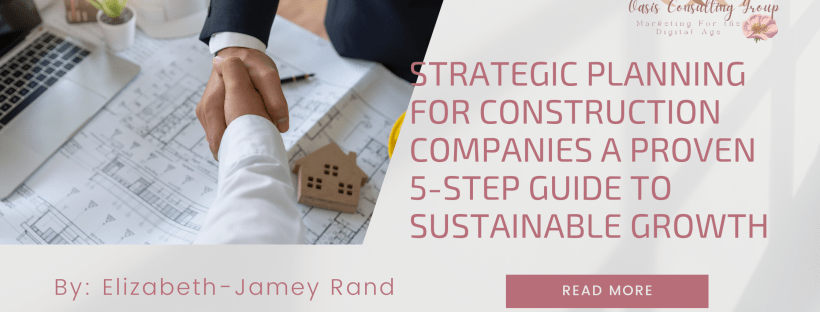
Strategic Planning for Construction Companies: A Proven 5-Step Guide to Sustainable Growth

In the fast-paced, margin-sensitive world of construction, it’s easy to fall into the trap of reactive decision-making. Job deadlines, labor shortages, and budget constraints often pull your focus to immediate issues—leaving little time for big-picture thinking. But here’s the truth: construction companies that implement strategic planning consistently outperform those that don’t.

Whether you’re a GC, specialty contractor, or construction management firm, you need a strategy to grow intentionally and sustainably. Here’s how to do it in five actionable steps.

Step 1: Define Your Vision and Mission

Start by answering these two questions:

  • Where do you want your company to be in 3–5 years?
  • What values drive your business?

Your vision provides direction, while your mission anchors your purpose. Together, they guide every decision—from hiring and partnerships to client acquisition.

Pro Tip: Make these statements clear and inspiring enough that your team can rally around them.

Continue reading

The Power of Storytelling in Business Development: How to Connect, Convert, and Grow

In the world of business, logic may open the door, but emotion seals the deal. That’s where storytelling becomes a game-changer. Whether you’re pitching a product, launching a brand, or nurturing client relationships, a powerful story can move people to action in ways data alone never will.

Storytelling humanizes your brand, clarifies your message, and gives your audience something real to believe in. When used strategically, it’s one of the most effective tools for business development and long-term growth.

Here’s how storytelling can elevate your business development strategy—and how to do it well.

Build Trust Through Transparency

Customers do business with people they trust. Sharing authentic stories—about how your business started, the obstacles you’ve overcome, or how your service changed someone’s life—makes your brand relatable and credible. Vulnerability fosters connection.

Continue reading

Top Social Media Platforms Every Realtor Should Use—and How to Maximize Each One

Real estate is a relationship-driven business—and in 2025, those relationships are often sparked and nurtured through social media. But not all platforms are created equal, especially for realtors who want to stand out and convert engagement into sales.

Here’s a breakdown of the top social platforms for real estate professionals, plus strategic tips on how to use each one:

Platform #1. Instagram: Visual Storytelling at Its Best

Instagram is a must for realtors. With its visual-first layout, it’s the perfect platform to showcase listings, offer behind-the-scenes looks, and build a lifestyle brand.

How to Use It:

  • Use Reels for quick home tours or market tips.
  • Post carousel photos of your listings.
  • Share testimonials in Stories with “Client Spotlight” highlights.
  • Use local hashtags like #AtlantaRealtor or #HoustonHomes.
Continue reading

Mastering Google My Business: How to Increase Visibility and Win Local Customers

In the digital age, your first impression often happens before a customer ever steps foot in your store or visits your website—it happens on Google. That’s why Google My Business (GMB) is one of the most essential tools in your marketing arsenal.

When someone searches for your business or services you offer, GMB determines what they see. It showcases your reviews, business hours, location, services, and more. And best of all? It’s completely free.

If you’re not actively managing your GMB profile, you’re leaving leads, credibility, and sales on the table. Here’s how to use it to your advantage.

Claim and Verify Your Listing

Start by claiming your business on Google. Once verified, you gain control over the information Google displays about your business. This prevents outdated or inaccurate listings from hurting your credibility.

Keep Your Information Up to Date

Ensure your business name, address, phone number, website, and hours are correct. If your hours change during holidays or seasons, update them. Google rewards active listings with higher rankings in local search.

Continue reading

Are You Running Your Construction Business Like a CEO—or Just a Contractor?

In the construction world, many business owners start out as skilled tradespeople who eventually “grow into” the role of business owner. But here’s the truth: there’s a massive difference between running jobs and running a company.

If you’re still wearing your toolbelt more often than reviewing budgets or developing strategies, you might be operating more like a technician than a CEO. And that’s holding your construction business back.

Let’s explore what it means to truly run your company like a CEO—and how to make the mindset shift.

CEO vs. Contractor Mindset

A contractor thinks short-term: finish this job, meet payroll this week, fix today’s fire.

A CEO thinks long-term: What’s our profit margin trend? What systems are breaking? What can we automate? Who do we need to hire to grow?

Start thinking like the leader of a scalable business—not just a doer.

Get Out of the Weeds

CEOs don’t need to be on-site every day. Instead, they delegate, build teams, and oversee operations from a strategic perspective. This doesn’t mean you don’t care—it means you care about everything, not just the job site.

  • Your time should be spent on:
  • Reviewing KPIs and job costing
  • Planning next quarter’s pipeline
  • Building vendor and client relationships
  • Hiring, training, and developing leaders
Continue reading