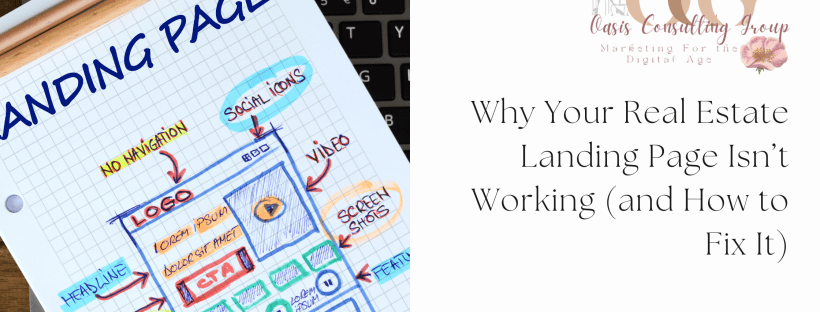

Why Your Real Estate Landing Page Isn’t Working (and How to Fix It)

Why Your Real Estate Landing Page Isn’t Working

If you’re running ads, posting on social media, or driving traffic to a landing page but not seeing leads come through, you’re not alone. This is one of the most common frustrations real estate professionals face.

A landing page is supposed to do one thing well: convert visitors into leads. When that doesn’t happen, it’s usually not because people aren’t interested in real estate. It’s because the page isn’t answering the right questions or guiding visitors clearly enough.

Let’s break down the most common reasons real estate landing pages fail and how to fix them without starting from scratch.

Your Message Isn’t Clear Enough

The first few seconds matter.

When someone lands on your page, they should instantly understand:

  • Who the page is for
  • What problem it solves
  • What they should do next

If your headline is vague or overly generic, visitors will leave. Phrases like “Your Trusted Real Estate Expert” don’t explain value. Instead, focus on outcomes such as helping buyers find homes or sellers maximize value.

Clarity always converts better than clever wording.

Continue reading


What to Include in Your Real Estate CRM for Better Conversions and Stronger Client Relationships

What to Include in Your Real Estate CRM for Better Conversions

Many real estate agents invest in a CRM but never fully use it to its potential. Instead of becoming a conversion engine, it turns into a digital address book filled with unorganized contacts and missed opportunities.

A properly built real estate CRM should support your entire client journey, from first interaction to closing and beyond. When structured strategically, it helps you follow up consistently, personalize communication, and convert more leads without adding more work to your day.

Let’s break down what your real estate CRM should include to improve conversions and build stronger client relationships.

Clear Lead Source Tracking

One of the most important CRM features is lead source tracking.

You need to know where each lead comes from, whether it’s social media, Google Ads, referrals, open houses, or email campaigns. This information allows you to understand which marketing efforts are working and where to invest your time and budget.

When you track lead sources properly, you can also tailor follow-up messaging based on how the lead first engaged with you.

Continue reading

Google Ads vs. Facebook Ads: Which Is Better for Realtors Looking to Generate Leads?

Google Ads vs. Facebook Ads: Which Is Better for Realtors?

If you’re a realtor investing in digital marketing, you’ve likely asked this question more than once. Should you be using Google Ads or Facebook Ads to generate leads?

The answer is not as simple as choosing one over the other. Both platforms are powerful, but they work in very different ways. Understanding how each platform attracts prospects and supports your sales process helps you choose the right strategy for your business goals.

Let’s break down the strengths, limitations, and ideal use cases for both Google Ads and Facebook Ads so you can make an informed decision.

Understanding Buyer Intent

The biggest difference between Google Ads and Facebook Ads comes down to intent.

Google Ads capture people who are actively searching. When someone types “homes for sale near me” or “sell my house fast,” they are signaling immediate intent. These users are often closer to making a decision.

Facebook Ads, on the other hand, focus on discovery. Users are not searching for real estate services. They are scrolling. This means Facebook Ads work best for nurturing interest, building awareness, and staying top of mind.

Both types of intent matter in real estate.

Continue reading

How to Turn Social Media Followers into Real Estate Leads That Actually Convert

How to Turn Social Media Followers into Real Estate Leads

Many real estate agents spend hours posting on social media but still struggle to turn likes and follows into actual leads. The truth is, having a large following does not automatically translate into business growth. What matters is how you guide those followers toward trust, conversation, and action.

Social media is not just a visibility tool. When used strategically, it becomes a powerful lead generation system that works consistently in the background. The key is shifting from posting just to post toward posting with intention.

Let’s walk through how to turn social media followers into real estate leads in a way that feels natural, authentic, and sustainable.

Understand the Difference Between Attention and Intent

Followers give you attention. Leads show intent.

Not everyone who follows you is ready to buy or sell today, but many are watching, learning, and waiting. Your job is to nurture that attention until intent forms.

This happens when your content answers real questions, removes uncertainty, and positions you as a trusted guide rather than a salesperson.

Continue reading

10 Proven Lead Magnet Ideas for Real Estate Agents to Attract High-Quality Leads

10 Lead Magnet Ideas for Real Estate Agents

Generating leads is one of the biggest challenges real estate agents face. The market is competitive, attention spans are short, and buyers and sellers are more informed than ever. Cold outreach alone is no longer enough. Today’s agents need strategies that attract prospects organically and build trust before the first conversation ever happens.

That’s where lead magnets come in.

A lead magnet is a free, valuable resource offered in exchange for contact information. When done correctly, it positions you as a trusted expert while nurturing long-term relationships rather than chasing short-term interest.

Here are 10 effective lead magnet ideas real estate agents can use to attract qualified leads and grow their business.

1. First-Time Homebuyer Guide

A first-time homebuyer guide is one of the most powerful lead magnets in real estate.

Many buyers feel overwhelmed by the process. A simple guide explaining steps, timelines, and common mistakes instantly provides value and builds trust. This works especially well when paired with local insights.

Continue reading