

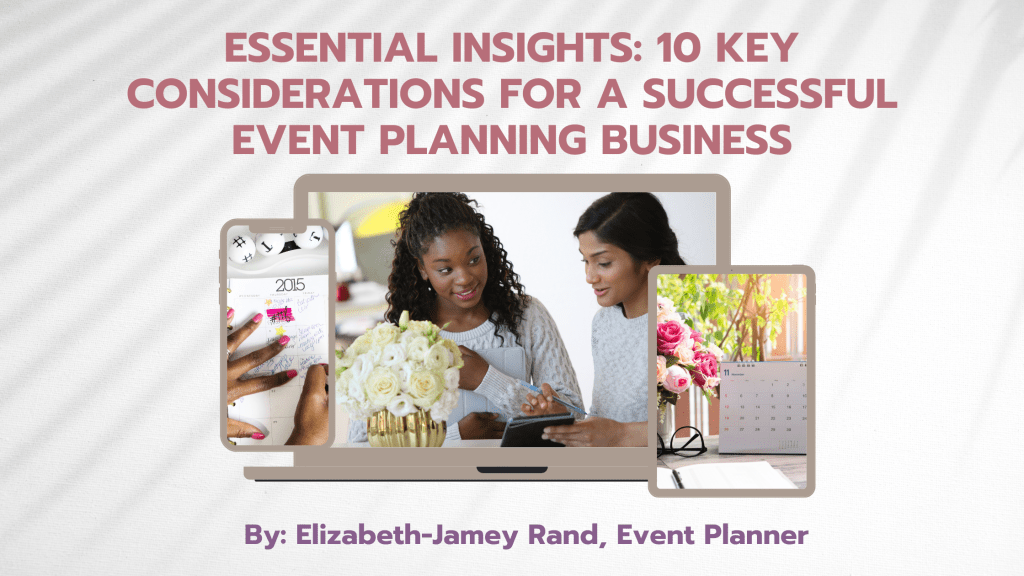
The event planning business is booming. The industry is expected to grow by almost 10% in the next decade. And, with the popularity of destination weddings and corporate events, there’s no shortage of work for event planners.
However, with the growth of the industry comes increased competition. If you want to start an event planning business, it’s essential that you do your research and create a comprehensive business plan.
In this blog post, we’ll share 10 key considerations for a successful event planning business. From identifying your target market to creating a marketing strategy, these tips will help you get started on the right foot.
Identify your niche: Determine the type of events you want to specialize in, such as weddings, corporate events, conferences, or social gatherings. Focusing on a specific niche can help you target your marketing efforts and establish yourself as an expert in that area.
Build a solid network: Networking is crucial in the event planning industry. Establish connections with vendors, suppliers, venues, and other professionals in the event industry. Collaborating with trusted partners can enhance your reputation and help you deliver high-quality events.
Develop strong organizational and multitasking skills: Event planning requires excellent organizational and multitasking abilities. You’ll need to manage multiple tasks simultaneously, stay organized, and pay close attention to details to ensure every aspect of the event runs smoothly.
Understand client needs: Listen carefully to your clients and understand their vision and expectations for the event. Effective communication and understanding their needs will help you deliver an event that exceeds their expectations.
Continue reading










 oasisconsultinggroup.org